
What You’re Actually Paying For With a Franchise Cabinet Company
A homeowner in Boca recently sent me a screenshot of a quote she’d just gotten from a national pull-out shelf franchise. Six drawers, factory-built, installed. The total had her eyebrows in her hairline. I told her what I’d charge for the same six drawers. The gap was significant. Her next text: “Where does the extra money go?”
Fair question. Here’s the honest answer.
The short version
When you pay a franchise cabinet company, you’re paying for plywood drawers and glides plus a national marketing budget, a designer’s commission, a franchise royalty back to corporate, factory plus installer margins, and shipping. The materials are maybe 20 to 30% of the invoice. The rest is the layered business model that gets the product from a factory in another state into your kitchen.
That’s not a scam. It’s just how franchises work. You’re not just buying drawers, you’re buying a polished sales process and a national brand. If that’s what you want, the price makes sense. If you didn’t realize you were buying those things, this post is for you.
Where the money goes in a franchise quote
Roughly, here’s how a typical franchise invoice breaks down. Percentages vary by company and by project, but the line items are consistent across the industry:
- National marketing budget (10-15%). TV spots, Google ads, sponsorships. The brand recognition that got you to call them costs money to maintain. Every customer’s invoice contributes.
- Designer/salesperson commission (10-20%). The person who came to your house with the tablet earns a percentage of the deal they close. That’s their job. Their pay scales with the size of the quote, which is part of why the quotes are big.
- Franchise royalty (5-10%). The local franchisee pays a slice of every job back to corporate. This is in their franchise agreement. It’s not negotiable on a per-job basis.
- Manufacturing and shipping (20-30%). The factory in another state builds your drawers, then ships them to your local installer. Both costs are real and both are baked into the quote.
- Local installer subcontractor (15-25%). The person who actually puts the drawers in your kitchen is usually not on the franchisee’s payroll. They’re a subcontracted installer paid per job.
- Materials (15-25%). The plywood, glides, and finish. Same materials any pull-out shelf company uses.
Add it up and the materials are a minority share of what you paid. The rest is the layered business model.
Where the money goes when you hire a local craftsman
A local one-person operation has a different cost stack:
- Materials (35-50%). Same plywood, same Blum or Salice glides. The actual product is the same.
- The craftsman’s time (40-55%). The hours spent measuring, building, finishing, delivering, and installing. This is the labor cost of an experienced trades person.
- Tools and shop overhead (5-10%). Rent on the shop, blade replacements, sealer, sandpaper, truck insurance.
- Local advertising (1-3%). Maybe a Google business profile and some referral cards. No national TV budget.
There’s no designer commission, no franchise royalty, no national marketing budget, no factory margin, no installer subcontractor margin. The work goes from the craftsman’s hands to your kitchen with no intermediaries.
The math on a typical pull-out shelf project
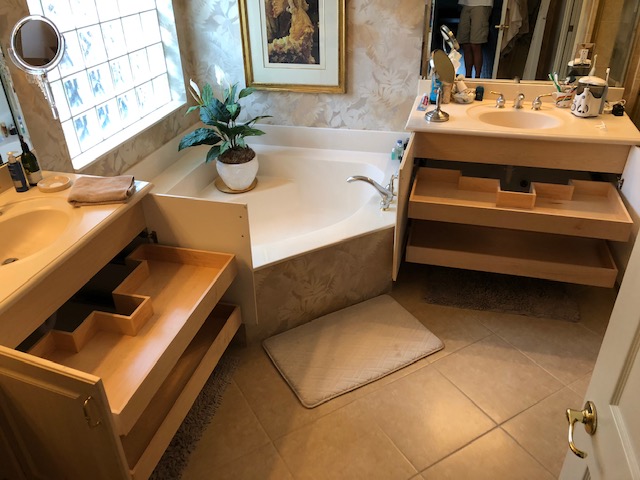
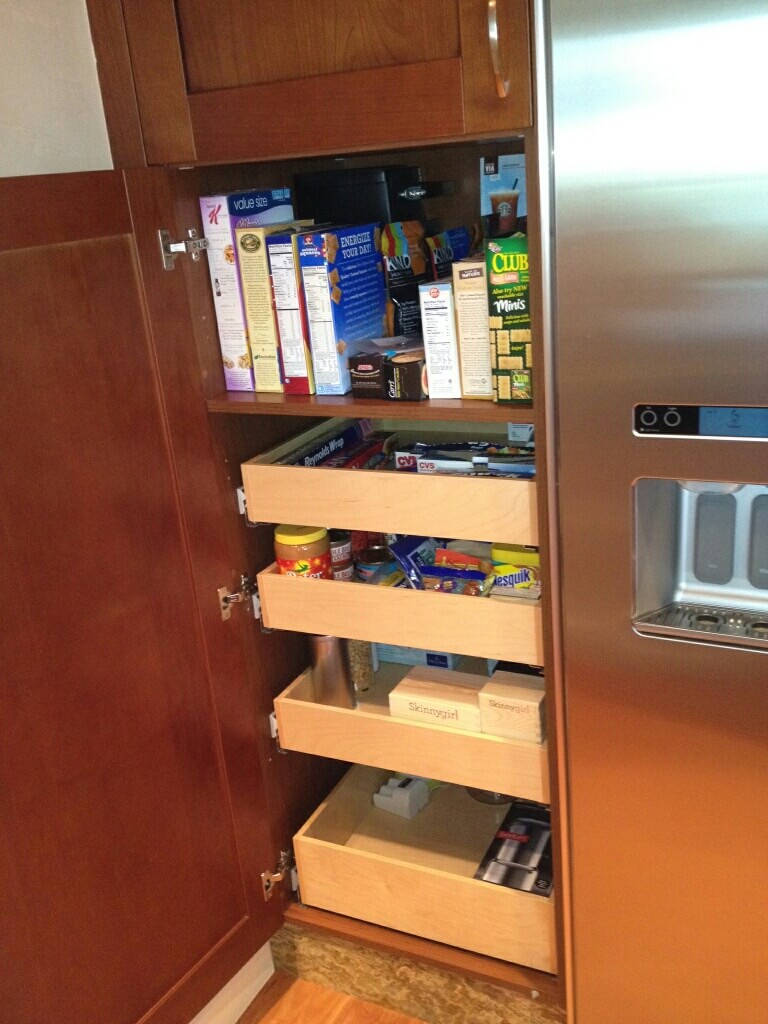
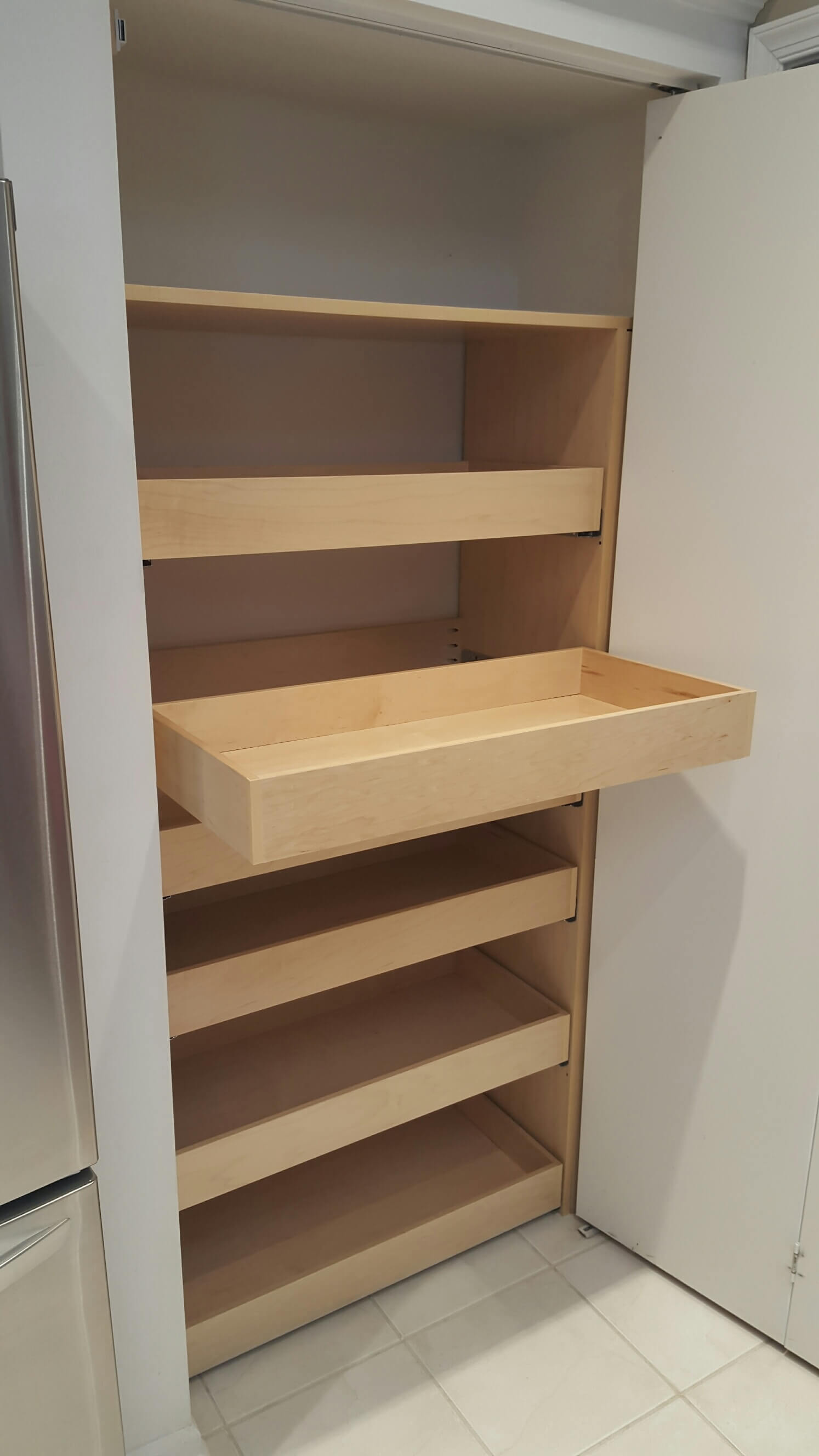
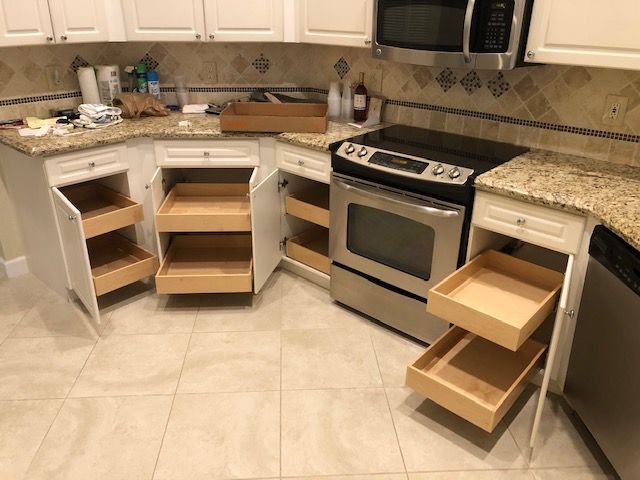
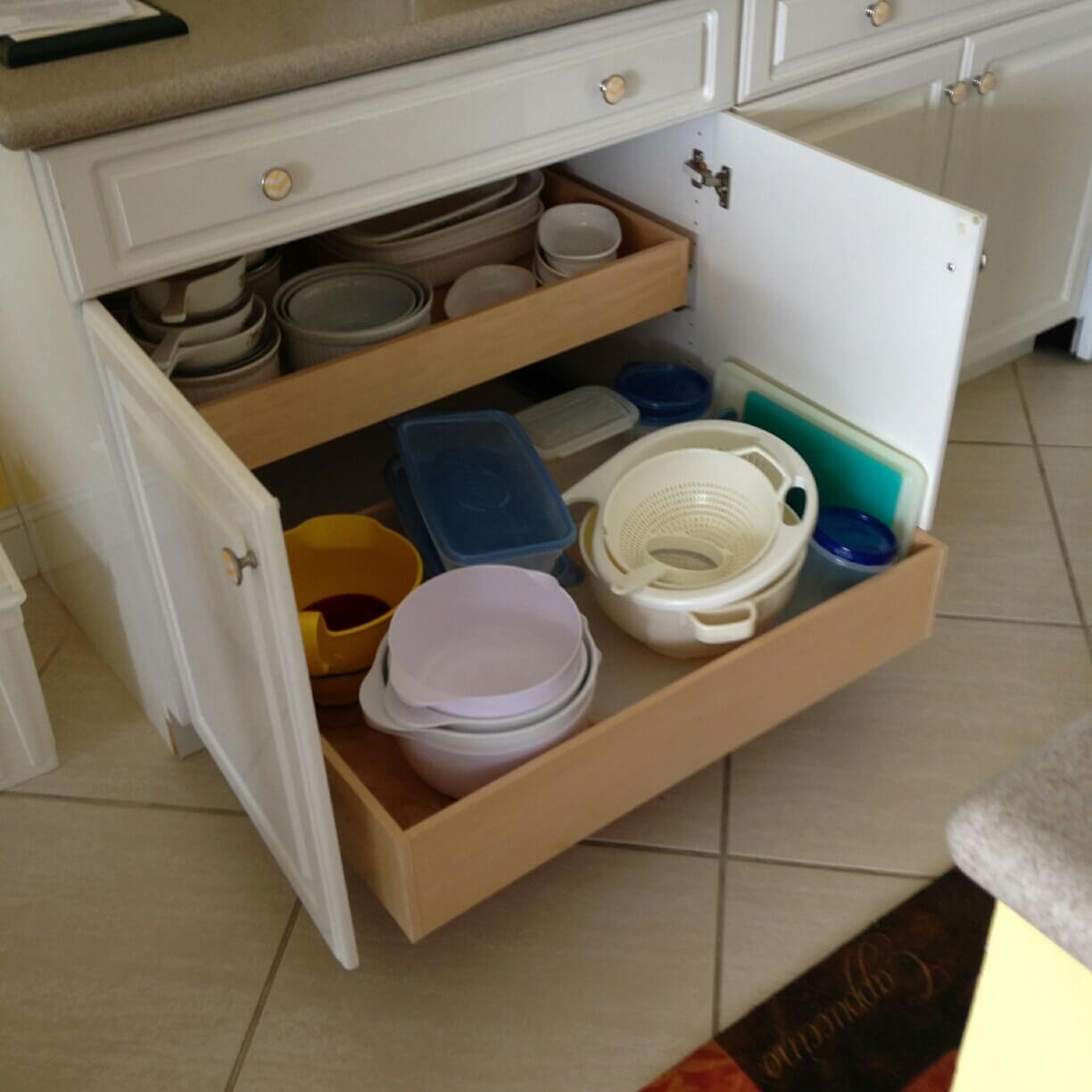
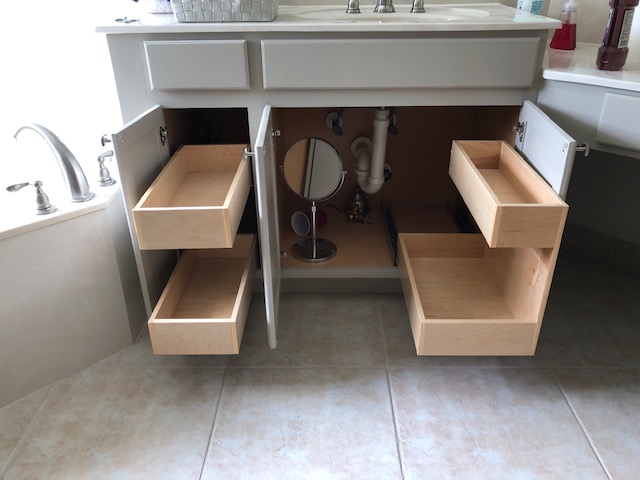
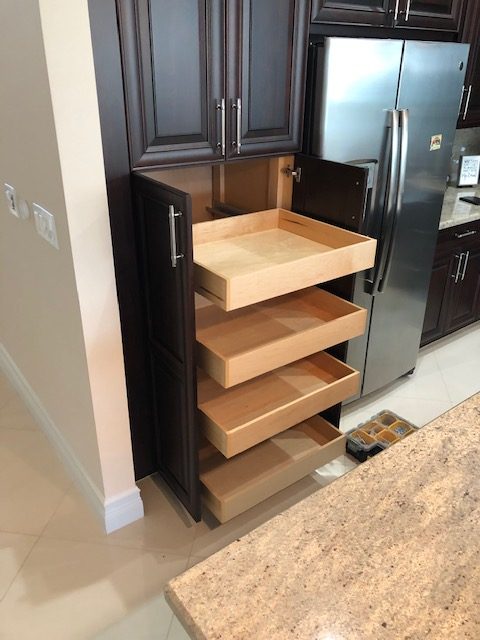
Take a kitchen with six standard lower cabinets needing pull-out drawers. Plywood drawer boxes, Blum side-mount soft-close glides, finished with a clear sealer, installed in one day.
A franchise quote on that project will land in a range that surprises most homeowners. The materials and hardware involved cost a small fraction of the quote. The rest is the franchise business model.
A local craftsman quote on the same six drawers will typically be 30 to 60% lower for a comparable build. Not because the materials are cheaper, not because the hardware is lighter, but because the overhead structure is fundamentally different.
This isn’t a knock on franchises. It’s just the math.
Why both models exist
Franchises exist because some homeowners want the experience that comes with paying more. The designer in branded apparel, the tablet presentation, the financing on the spot, the brand recognition. That’s a legitimate product. People pay for it because they value it.
Local craftsmen exist for the homeowners who don’t need the experience and would rather pay for the drawers and the labor. Same outcome inside the cabinet, different purchase process.
Neither is wrong. The mistake is assuming the franchise is the only option and not realizing what the price covers.
Five questions that surface where your money is going
Use these on any quote you get:
- Who built the drawers, and where? Local workshop or out-of-state factory?
- Who is showing up on install day? The owner, an employee, or a subcontracted installer?
- Is the person who measured my cabinets the same person who’s installing them?
- What’s the cost breakdown of materials versus labor versus everything else? Most quotes won’t itemize this, but ask anyway. The answer (or the dodge) is informative.
- Is your pricing the same as what your competitor down the street would quote me? A franchise has a national pricing system. A local craftsman quotes the job.
FAQ
Why is the same drawer twice as expensive from a franchise?
Because the franchise has to cover a national marketing budget, a designer’s commission, a franchise royalty, factory margin, installer margin, and shipping. The local craftsman covers materials and labor.
Do franchise companies build the drawers themselves?
Most don’t. They’re built at a national factory and shipped to local installers. The local franchisee runs the sales, scheduling, and customer service. The factory builds the product.
Is the higher price worth it for the experience?
For some homeowners, yes. The polished sales process, the financing, and the brand recognition are real things you’re paying for. Whether they’re worth the premium is a personal call.
Can I negotiate with a franchise designer?
Sometimes. The designer has limited authority to discount, but there’s usually some room, especially toward the end of a sales month. Don’t expect to get to local-craftsman pricing.
Do local craftsmen offer financing?
Most don’t. I take card, check, or cash. If financing is a non-negotiable for your project, the franchise option is a better fit.
Is there a quality difference?
For the drawer itself, generally no. Same plywood, same hardware in most cases. The difference is in the business model, not the product.
Want a second quote?
If you’ve got a franchise quote in hand and want to see what the same project would look like from a local craftsman, send me the spec or call me with the numbers. I’ll come out and write you a free quote. No pressure.
Call 561.308.0418 or use the contact form. For more on the franchise versus local decision, read my ShelfGenie alternative writeup or my guide to choosing a pull-out shelf company.
Back to Blogs